Plastic-Free Lunch Boxes: Steel, Seals and School Fit
Compare the lid, the meal and the bag. Steel construction, a liquid seal and temperature control solve different problems.
As an Amazon Associate we earn from qualifying purchases. This comparison uses manufacturer documents and public food-handling guidance. We have not performed hands-on leak, temperature-retention or particle-release tests.
For a plastic-free lunch box, start with the meal and the closure. An all-steel box can suit foods that do not leak; a steel box with a silicone lid offers a different compromise for wet foods. Neither a steel body nor a leakproof claim means that lunch will stay cold or hot until you eat.
This guide focuses on carrying meals to school or work. If your main need is storing leftovers and reheating them at home, start with our glass food-storage guide.
Three lunch-box formats to compare
On small screens, scroll the table sideways to read every column.
| Model | Construction and seal | Decision it serves |
|---|---|---|
| ECOlunchbox Three-in-One Classic | Steel containers and lid; not leakproof | Stack a meal and sides without a silicone lid |
| ECOlunchbox Splash Box | Steel base, silicone lid; maker claims a leakproof seal | Carry one main dish or loose food without fixed dividers |
| PlanetBox Voyager | Steel base, silicone lid; maker says compartments seal separately | Separate wet foods; manufacturer recommends ages 8+ |
These are document-based comparisons of different designs, not a tested ranking. A model name matters: the Classic is not the Giant, the Splash Box is not the XL, and Voyager instructions should not be borrowed from another PlanetBox.
What “plastic-free” needs to tell you
Ask what the base, lid, seal, clips and optional accessories are made from. “Stainless steel” on a listing can describe only the tray. A separate sauce pot, decorative cover or bag may add materials that the main box does not use.
We distinguish all-steel construction from steel with silicone. Silicone is a synthetic polymer; a brand's plastic-free wording is not a claim that its whole product is metal. If your preference excludes silicone too, look for a documented all-steel assembly and accept its stated limits on liquids. A material description alone does not establish zero particle release or a health benefit.
How the three designs change packing
Stacked steel · no liquid seal
ECOlunchbox Three-in-One Classic, blank lid
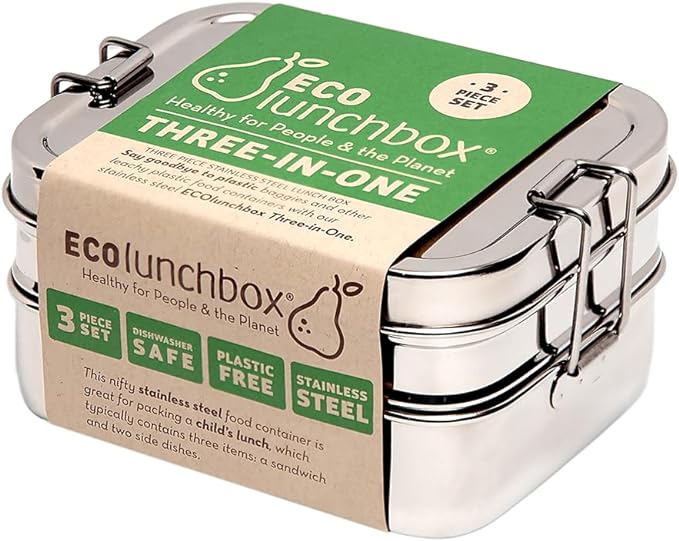
ECOlunchbox lists a steel set with a lower tray, upper tray and removable snack container. It measures 5.5 × 4 × 2.75 inches and weighs 16 ounces empty. The maker explicitly says it is not leakproof.
The advertised 31 ounces adds the listed 12-, 14- and 5-ounce containers. Because the snack container nests inside the top tray, do not treat that total as unrestricted space in one cavity. Removing it frees space upstairs. Check the separate sections against the foods you pack, rather than comparing only the largest number on the listing.
Materials uncertainty: the manufacturer's Classic page specifies 201 stainless steel, while the linked Amazon listing's ingredients say 205 Series. We have not resolved the alloy in delivered stock. If a particular steel grade is essential to you, ask the seller to confirm it before ordering.
Consider it for: a compact stack of foods that do not run. Tradeoff: it is the wrong format for loose dressing or yogurt unless a separately sealed container handles that food. The maker's FAQ explains clip adjustment; that is not proof every child can operate the closure.
One cavity · flexible lid
ECOlunchbox Splash Box, 24 oz
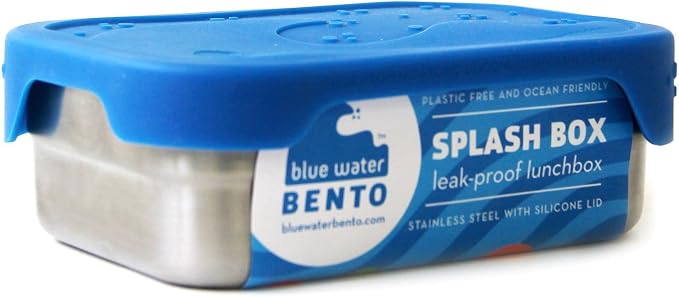
The regular Splash Box pairs an 18/8 stainless-steel base with a silicone lid. The maker lists 24 ounces, or three cups, in a 6.5 × 4.75 × 2-inch container and describes the lid as leakproof. This is a manufacturer claim, not our test result.
Consider it for: a single dish, sandwich or meal where fixed compartments would get in the way. Tradeoff: one sealed outer boundary does not keep separate foods from mingling inside. Dressing mixed into a salad is a different packing problem from dressing carried beside a sandwich.
The silicone cover is part of the food-contact system. If you want an all-metal lid, this is not that choice. Confirm that a replacement lid matches the regular Splash Box; the XL is a separate size.
The Amazon.com offer checked November 4 is one regular 24 oz Splash Box with a blue silicone lid, ASIN B00JLP145A. The separate Splash Box & Pod bundle is a different offer. To close this lid, the maker says to press it onto the rim; avoid turning it inside out, which can damage the tabs.
Four sealing compartments · ages 8+
PlanetBox Voyager
PlanetBox specifies a steel base and silicone lid, four cups of capacity, a 7.5 × 7.5 × 2-inch footprint and an empty weight of 0.91 pound. It says all four compartments seal individually and recommends the model for ages eight and over.
Consider it for: foods that should stay separate during travel. Tradeoff: a fixed divider layout limits the size of each item, even when total capacity looks generous. Measure the largest food you regularly pack. The wider footprint also needs a different bag shape from a narrow stack.
Follow PlanetBox's lid-seating instructions. A seal depends on correct assembly, not just the material. Its 8+ recommendation makes this a different choice from a box marketed for preschool use.
Check the meal, then the bag
Write down three lunches you actually repeat. For each, identify the largest solid item, any food that can run, and whether you need separate compartments. This turns “which box is best?” into a fit check.
- Sandwich fit: compare the bread or wrap with the usable section, not the outer dimensions of the box.
- Working room: leave enough access to lift food or use a fork; filling every gap is not necessarily convenient.
- Carrying space: allow room for cold sources and a drink before choosing the lunch bag. A box that fits alone may leave no useful packing space.
- Daily load: compare the empty box, meal, bottle and cold sources together. Listed box weight is only part of what someone carries.
For school, the closure is part of the decision
Check the school's container rules and the manufacturer's age guidance. Before relying on a new box, have the child practice opening it, replacing each piece and closing it on a table. Treat this as a check for that child, not a reason to override an age recommendation.
Count loose pieces that must come home. A nested snack container or removable lid may be useful, but it also needs storage during lunch and washing afterward. A simpler layout may suit a routine better than extra compartments. We have not assessed these closures with children.
Leakproof does not mean insulated
ECOlunchbox says its single-wall Classic and Blue Water Bento ranges are not thermoses. PlanetBox likewise says Voyager is not designed to retain heat. Do not infer temperature control from a snug lid or a steel wall.
FoodSafety.gov advises two cold sources for perishable packed lunches and storage in a refrigerator or cooler on arrival when available. A material preference should not displace the cooling equipment a meal needs. For food intended to stay hot, use a suitable insulated food container and follow its handling instructions.
Choose a routine you will keep doing
ECOlunchbox's care guide permits dishwashing and warns against bleach and abrasive cleaning. PlanetBox lists Voyager as dishwasher-safe. Clean the seal-contact areas and let parts dry before storage; inspect any lid or closure that no longer seats properly.
For reheating, these specific models are not microwave choices: ECOlunchbox excludes its steel containers, and PlanetBox excludes Voyager from oven and microwave use. Its permission for the Explorer's removable tray does not apply to Voyager. Use the exact model's directions; a general “steel lunch box” label is not a heating instruction.
Plastic-free lunch-box questions
Are stainless-steel lunch boxes leakproof?
Not automatically. The Three-in-One Classic has no liquid seal, while the Splash Box and Voyager use silicone lids with manufacturer leakproof claims. Check the exact model and close it as directed.
Is a steel box with a silicone lid an all-metal design?
No. Silicone is a synthetic polymer. We label steel-and-silicone designs separately from all-steel designs so you can choose the materials you want.
Is the biggest advertised capacity always the most useful?
No. Dividers, nested containers and the shape of your food affect what fits. Compare individual sections and the lunch bag space, including room for cold sources.
Can a leakproof box keep lunch cold until school lunchtime?
A leakproof claim does not establish insulation. Perishable lunches still need appropriate cold storage. Check the packing guidance and the exact container's temperature instructions.
Sources and comparison method
Manufacturer specifications and US food-handling guidance were reviewed November 4, 2026. Dimensions, materials and performance claims are attributed to the makers; our fit comparisons are editorial inferences from those documents. We have not tested the products or established a health advantage. The Amazon offers and matching product photos were checked November 4: the Classic in Regular size, one set with a blank steel lid, and one regular 24 oz Splash Box with a blue silicone lid. Their affiliate links were generated through Amazon Associates SiteStripe. Voyager remains a manufacturer comparison without a verified Amazon offer. Prices and stock can change.
For the rest of the packed meal, our bottle guide separates metal bodies from drinking lids and seals. Keep home storage and reheating decisions in the food-container guide.