Safe Stainless Steel Water Bottles: Lids & Plastic-Free Picks
Looking for safe stainless steel water bottles? Check the lid as carefully as the body. Here are three options, their plastic-contact tradeoffs, and the limits of “non-toxic” claims.
As an Amazon Associate we earn from qualifying purchases. We may earn a commission through our links at no extra cost to you. Recommendations are based on the documented criteria in this guide. Check the selected size, lid, seller, and current price before buying.
Safe stainless steel water bottles: our shortlist
Start with the cap. A steel body replaces the large plastic container, but the underside of the lid, drinking spout, straw, and seal can still touch your water. For the least conventional plastic contact in this shortlist, we favor the Klean Kanteen Reflect with its included bamboo cap. Choose insulation instead if keeping water cold is more important to you.
Asking about a specific brand? See our lid-and-straw explainers for Stanley, Owala, YETI and Hydro Flask.
| Bottle | Why consider it | Material tradeoff |
|---|---|---|
| Klean Kanteen Reflect, 27 oz | Steel interior and steel underside of cap | Silicone seal; no insulation |
| Hydro Flask Standard Mouth, 21 oz | Insulated everyday bottle | Standard Flex Cap includes plastic |
| YETI Rambler with Chug Cap, 26 oz | Wide opening and dishwasher cleaning | Plastic drinking spout and cap components |
How to choose a stainless steel water bottle with no plastic
“Non-toxic stainless steel water bottle” and “safest stainless steel water bottle” are useful starting searches, but neither phrase tells you how a bottle is built. Our selection criteria are an identified steel grade, a clear description of every water-contact part, accessible cleaning surfaces, and replacement parts. We do not rank these bottles by measured health outcomes.
- Check the interior. Look for a manufacturer-specified stainless steel body and ask whether there is any internal coating or liner.
- Turn the cap over. A stainless exterior or color name does not establish that the underside is steel.
- Inspect the spout and straw. Both add contact surfaces; a plain screw cap and open rim are simpler to inspect.
- Account for the gasket. A bottle sold as plastic-free may still have a silicone seal. Silicone is a synthetic polymer and should be disclosed separately.
- Choose a cleanable design. Being able to remove a seal and replace a worn cap matters more than a vague “chemical-free” label.
Owala vs Stanley vs YETI vs Hydro Flask: compare the drinking path
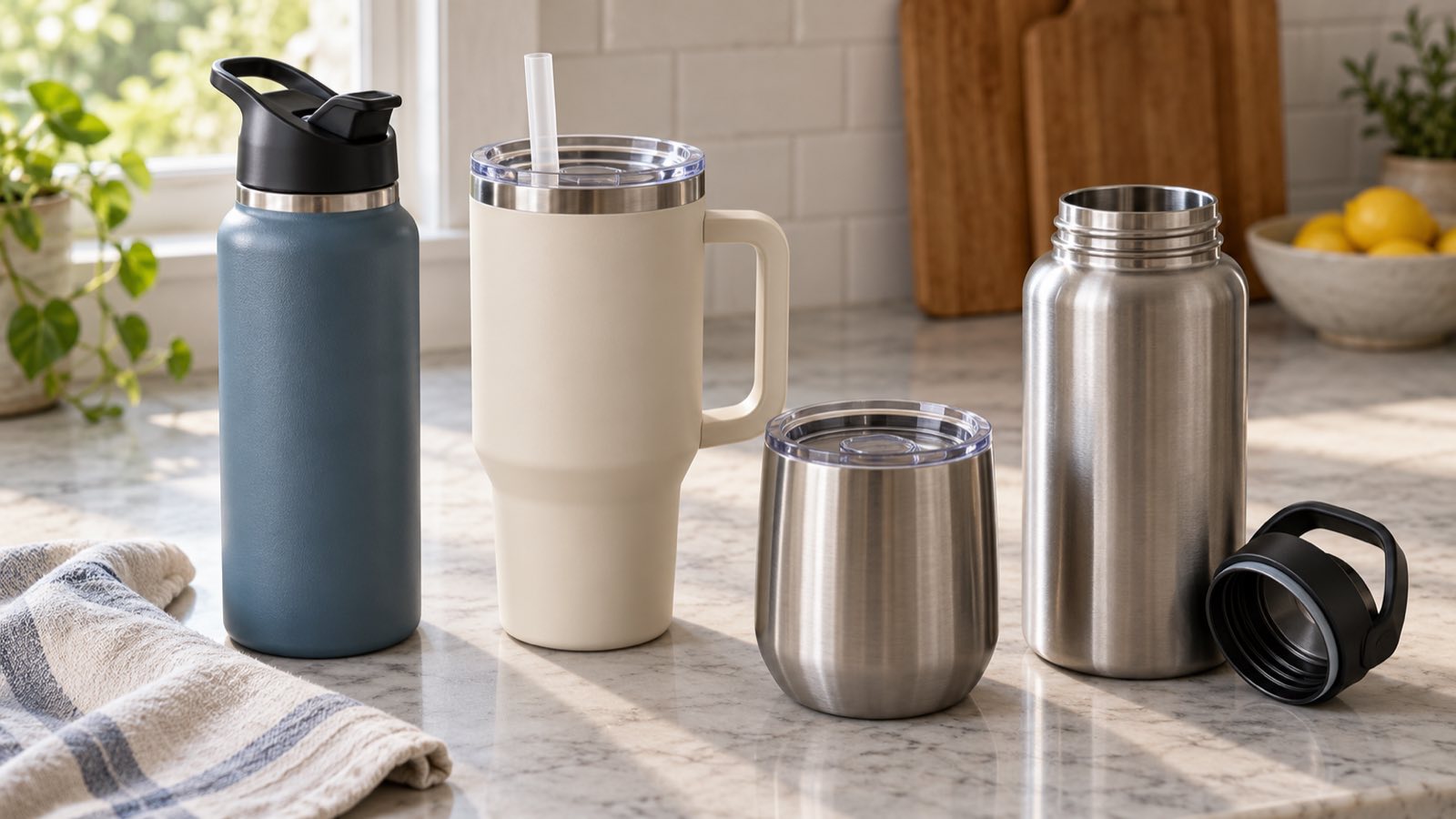
The useful comparison is between specific models and lids. All four examples below have steel bodies, but they offer different ways to drink. Choose the opening you will actually use, then consider how many parts you want to clean and whether the cap can be replaced. This is a materials comparison, not a ranking by measured particle release.
| Exact model | Water-contact tradeoff | Best fit by drinking habit | Check before choosing |
|---|---|---|---|
| Owala FreeSip stainless steel, 24 oz | Steel body; plastic spout/lid and removable straw | Sipping through a straw or tilting to drink from one lid | More lid surfaces to clean; FreeSip is not for hot or carbonated drinks |
| Stanley Quencher H2.0 FlowState, 40 oz | 18/8 steel body; plastic lid and reusable straw | A large handled tumbler for frequent sipping | Compare its size and lid format with your bag and desk routine |
| YETI Rambler with Chug Cap, 26 oz | 18/8 steel body; plastic cap and drinking spout; no straw in this configuration | Tilting to drink through a narrower opening | Removing the whole cap exposes the wide filling opening |
| Hydro Flask Wide Mouth with Flex Straw Cap, 32 oz | Steel body; plastic lid and straw | Cold-water sipping through a closeable straw cap | Wide Mouth cap compatibility differs from the Standard Mouth bottle below |
The full part-by-part polymer composition is not established by the words “BPA-free” or “stainless steel.” Seals and small internal pieces deserve a separate check; we do not treat an undisclosed gasket or spout material as absent. Follow the model links for the individual brand sources and limitations.
Choose by how you drink
- You want a straw. Owala FreeSip, the Stanley Quencher and Hydro Flask's Flex Straw configuration provide that convenience, with the extra straw and lid surfaces it entails. Choose one you can take apart and wash as directed.
- You prefer to tilt the bottle. The YETI Chug Cap removes the need for a straw but retains a plastic drinking spout. A plain cap that comes off completely is another option if you prefer drinking from the bottle rim.
- Your priority is the least conventional plastic contact in our shortlist. Compare the Klean Kanteen Reflect and bamboo cap. It has a steel-facing cap and silicone seal, and gives up insulation and straw convenience.
- You already own a sound steel bottle. Check replacement caps before replacing the whole container. Solve a damaged-lid problem with a compatible part where possible.
Cap swaps need an exact compatibility check
Hydro Flask's Wide Mouth Stainless Steel Cap is listed for Wide Mouth bottles. It is not the cap to order for the 21 oz Standard Mouth pick below. The cap page does not provide a complete material bill for every seal and internal component, so a steel-cap description should not become a claim that every polymer has been eliminated.
For hot drinks, verify the cap as carefully as the bottle body. Owala's guidance excludes hot and carbonated drinks from FreeSip use. YETI's current Chug Cap instructions exclude carbonated drinks and contents above 185°F/85°C. Those rules are model-specific; do not transfer them to another lid or a similar-looking bottle.
What this comparison cannot tell you
A list of contact materials is not a measurement of how many particles reach your drink. We have not tested these models side by side for shedding, and cannot conclude that one brand is safer from its cap shape. Use the comparison to make an informed materials and maintenance choice, while keeping any health or particle-reduction claim separate.
Our pick for minimizing plastic contact
Klean Kanteen Reflect with Bamboo Cap (27 oz)
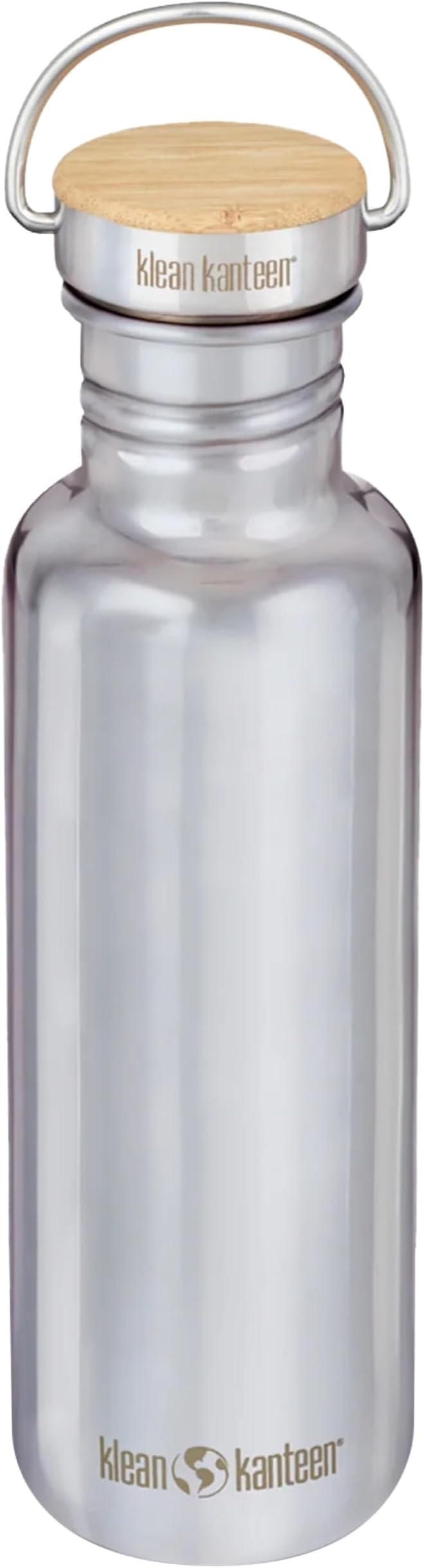
Klean Kanteen describes the Reflect as a single-wall bottle made from stainless steel, bamboo, and food-grade silicone. The water-facing interior of the cap is steel. This is the clearest match here for shoppers who want a stainless steel water bottle with no conventional plastic in the bottle-and-cap design.
The tradeoff: it does not insulate, and the seal is still silicone. Buy the Reflect with the bamboo cap rather than assuming every Klean Kanteen cap has the same construction. Hand-wash the bamboo cap as the manufacturer recommends.
Check price on AmazonInsulated everyday option
Hydro Flask Standard Mouth (21 oz)
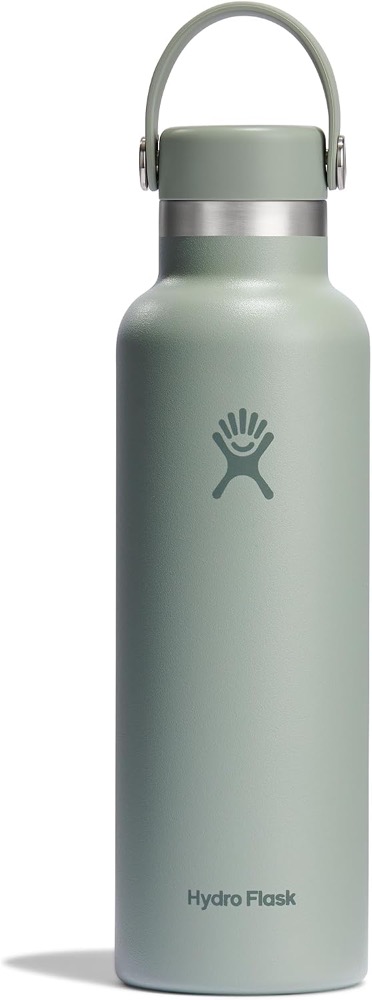
The 21 oz Standard Mouth is useful if you want insulation and a narrower bottle. Hydro Flask specifies up to 24 hours cold and 12 hours hot for this model; those are manufacturer claims, not our test results. Its ordinary Flex Cap means the complete bottle is not plastic-free.
The tradeoff: choosing steel for the body does not eliminate the cap's plastic contact. If you already own one, inspect and maintain it before replacing the whole bottle. Read our detailed answer to “Does Hydro Flask have microplastics?” for the distinction between materials and measured shedding.
Check 21 oz Flex Cap bottle on AmazonPrefer a larger straw bottle? The 32 oz Wide Mouth with Flex Straw Cap is a separate option with a plastic lid and straw. See its model details and product photo.
Wide-mouth alternative
YETI Rambler with Chug Cap (26 oz)
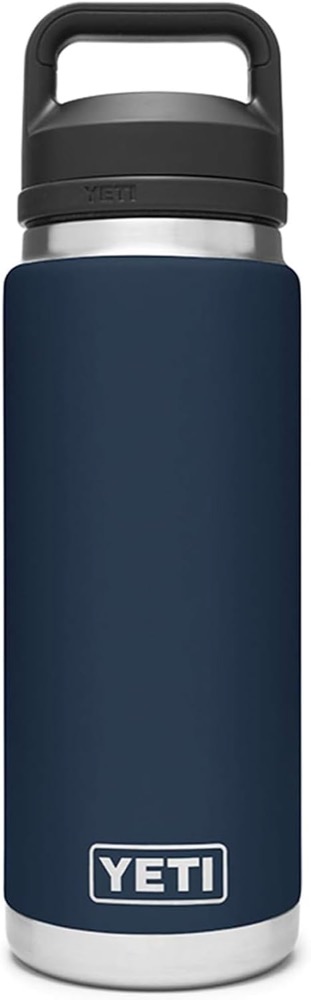
The Rambler offers an insulated steel body, a wide filling opening, and a removable Chug Cap. It suits buyers who value easy filling and dishwasher cleaning. The linked Amazon version has a Chug Cap, so it should not be confused with an all-steel lid or the newer Flip Chug design.
The tradeoff: the plastic drinking spout is part of the water path. Check YETI’s instructions for the exact cap before using hot or carbonated drinks; limits differ between lids. This is a convenience recommendation, not our no-plastic pick.
Check price on AmazonAre stainless steel bottles safe, non-toxic, or microplastic-free?
The steel body is not a plastic material. That does not establish that the water inside contains no microplastics: the source water, cap, and environment are separate factors. No bottle in this guide has been independently tested by us for a zero-particle result.
A steel-grade label also is not a guarantee of zero metal release in every condition. Health Canada’s materials guidance discusses the metals in stainless steel and why intended use and care matter. Do not extrapolate a cookware result into a measured exposure from a particular bottle.
The FDA’s microplastics overview describes substantial evidence gaps around exposure and health effects. We recommend these bottles for their documented construction, not as proven disease-prevention products. For the water going into them, see our guide to filters for microplastics.
What makes an eco-friendly stainless bottle?
A practical starting point is a bottle you can keep using. Check whether the maker sells caps and seals, whether its size fits your daily bag, and whether you can clean it comfortably. Repair a damaged lid when the body is still sound. We have not performed a life-cycle comparison and do not assign a universal number of refills needed to offset manufacturing. A steel bottle also makes an easy gift; see our plastic-free gift guide.
Care that keeps the bottle usable
- Wash the bottle and cap according to their separate care instructions.
- Remove seals only as directed, clean underneath, and let parts dry.
- Replace cracked caps, frayed straws, or damaged seals with compatible parts.
- Use a soft bottle brush; avoid scraping the interior with metal tools.
Frequently asked questions
What is the safest stainless steel water bottle?
We cannot identify a single safest bottle without comparable safety testing. Choose documented materials, a lid that matches your intended use, and parts you can clean and replace. Our low-plastic-contact pick is the Klean Kanteen Reflect with bamboo cap; it still uses a silicone seal.
Can a stainless steel water bottle have no plastic?
Some designs avoid conventional plastic in the body and cap, including the Klean Kanteen Reflect. Check the complete assembly: this model still contains food-grade silicone, and many other steel bottles use plastic caps or straws.
Is a BPA-free bottle also microplastic-free?
No. BPA-free describes one chemical claim; it does not mean the bottle contains no plastic or that its contents have been tested for microplastics.
Does Hydro Flask have microplastics?
Hydro Flask makes stainless steel bottles, but common caps include plastic. Material information does not quantify particles released into a drink. We did not find a bottle-specific shedding study in the sources reviewed.
Is there a non-microplastic water bottle?
No bottle can guarantee particle-free water merely from its material label. A steel or glass body can reduce plastic contact, while source water and lid materials still matter.
Sources and editorial method
We reviewed manufacturer specifications and the sources below on September 21, 2026. This is a research-based guide; we have not conducted hands-on product tests or measured particle release from these products. Material descriptions and laboratory results have different limits, which we identify in the recommendations.