The Best Plastic-Free Tea Swaps: Ditch Microplastic Tea Bags
Researchers found that one "silken" plastic tea bag releases roughly 11.6 billion microplastic particles into a single cup. The fix costs about ten dollars and makes better tea.
We may earn a commission when you buy through our links. This helps fund our reporting at no additional cost to you. Our recommendations are based solely on independent research and expert consensus. As an Amazon Associate we earn from qualifying purchases.
Quick Picks: At-a-Glance
| Pick | Best for | Why we recommend it |
|---|---|---|
| OXO Brew Tea Strainer Basket | Everyday mugs | Fine-etched stainless basket that fits nearly any mug, with a drip-catching lid. |
| Hiware Glass Teapot (1,000 ml) | Multiple cups | Borosilicate glass body with a removable all-steel infuser — nothing but glass and steel. |
| Traditional Medicinals Chamomile (96 ct) | Sticking with bags | Compostable, plastic-free paper bags from a brand that publishes its materials. |
| VAHDAM Loose Leaf Sampler | Getting started | Ten well-regarded teas in one tin set — the cheapest way to find your loose-leaf favorite. |
Why Tea Bags Are a Microplastic Problem
In 2019, chemists at McGill University steeped empty plastic tea bags — the premium "silken" pyramid kind, made from nylon or PET — in 95 °C water and counted what came out. The result: about 11.6 billion microplastic particles and 3.1 billion nanoplastics released into a single cup. That's orders of magnitude more than had been measured in any other food or drink at the time.
The mechanism is simple: heat is the single biggest accelerant of plastic shedding, and brewing tea means holding plastic at near-boiling temperature for minutes. Even conventional paper tea bags aren't safe by default — most are heat-sealed with a polypropylene skeleton so they don't fall apart in your cup.
The good news is that tea is one of the easiest swaps on this entire site. Loose leaf tea brewed through stainless steel or glass involves no plastic at any point — and it's what tea has been for roughly 4,900 of its 5,000-year history. If you're also boiling your water in a plastic-lined electric kettle, fix both ends of the brew: see our guide to plastic-free kettles.
In-Depth Reviews
Our pick
OXO Brew Tea Strainer Basket
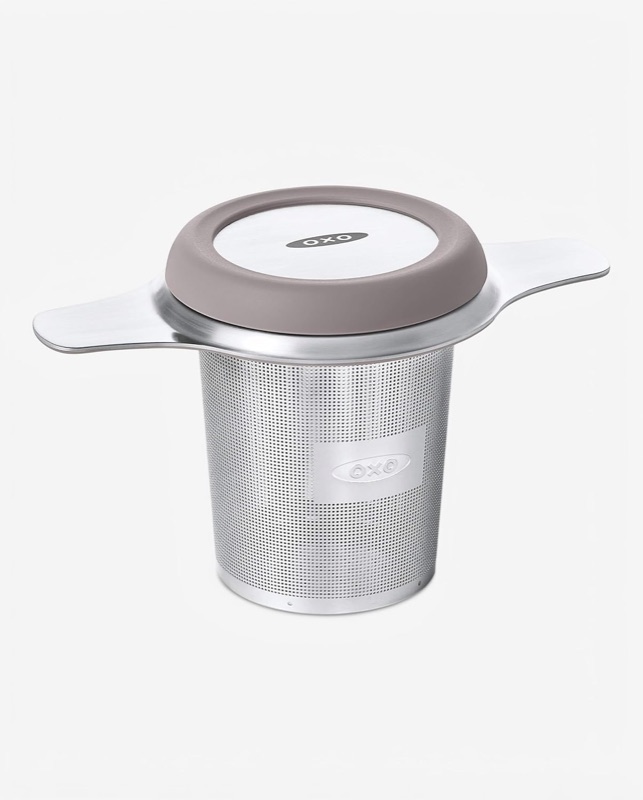
A deep etched-stainless basket that sits in almost any mug or teapot opening. The etched holes are fine enough for rooibos and fine-cut black teas that slip through cheap ball infusers, and the wide basket gives leaves room to expand — the main thing tea people complain about with novelty infusers. The lid doubles as a drip tray for the wet basket, which is the detail that makes you actually keep using it daily. Steel and a small silicone gasket; no plastic touches the water.
Check price on AmazonBest for multiple cups
Hiware Glass Teapot with Steel Infuser (1,000 ml)
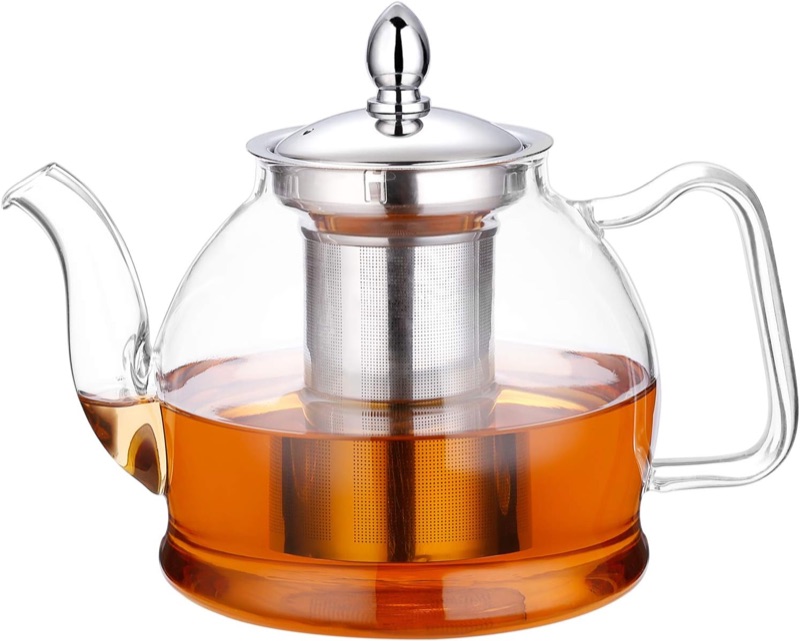
A borosilicate glass teapot with a removable 18/10 stainless infuser cylinder. The full brew path is glass and steel. It holds about four cups, sits happily on a warmer, and the wide infuser lets whole-leaf teas unfurl properly. Borosilicate handles boiling water without thermal-shock drama, though like all glass teapots it wants hand-washing. If you drink tea by the pot instead of the mug, this is the version of the swap you'll stick with.
Check price on AmazonBest plastic-free tea bags
Traditional Medicinals Organic Chamomile (96 count)
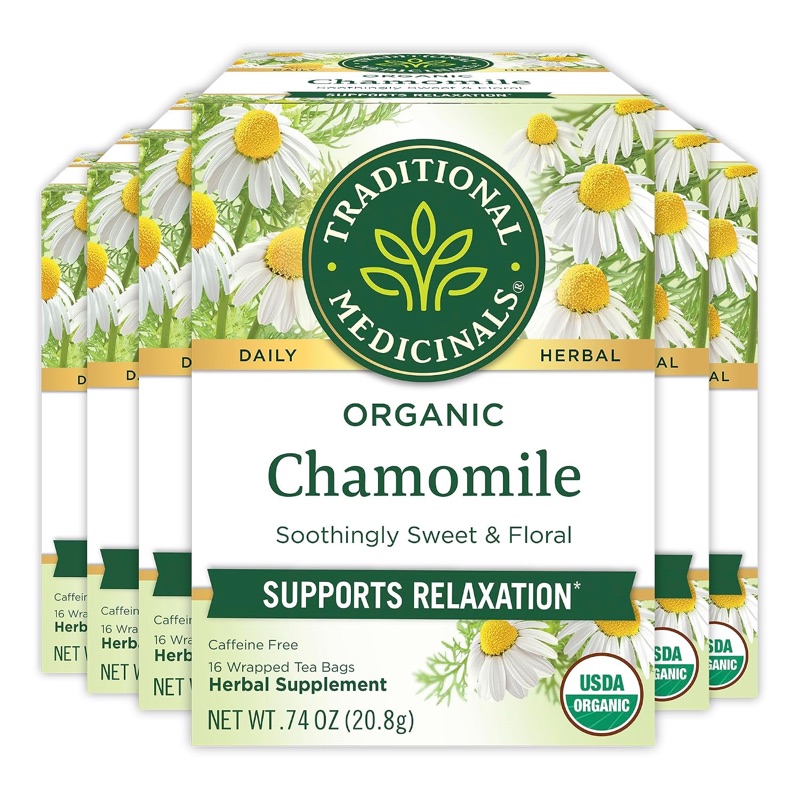
If bags are non-negotiable — office drawers, travel, houseguests — buy from a brand that documents its materials. Traditional Medicinals uses unbleached, compostable paper bags folded and stitched rather than heat-sealed with polypropylene, and the company publishes its packaging specs. The chamomile itself is pharmacopoeial-grade, which is why this specific box has a cult following. Any of their herbal line uses the same bag construction.
Check price on AmazonBest starter set
VAHDAM Top 10 Loose Leaf Tea Sampler
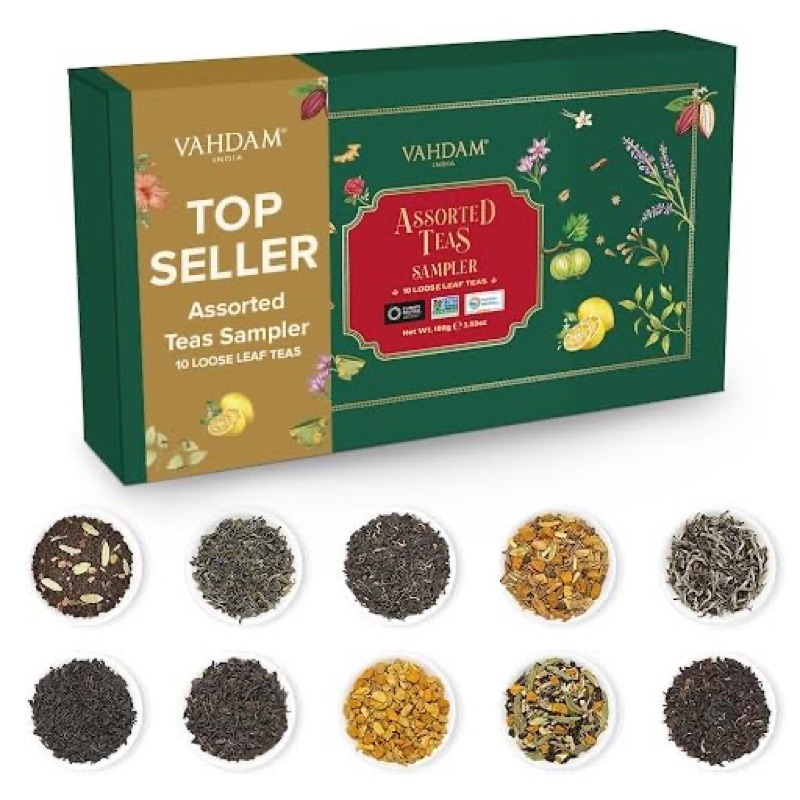
The biggest barrier to going loose-leaf is not knowing what to buy. This sampler solves it: ten teas — darjeeling, assam, green, oolong, chai and more — in resealable tins, shipped fresh from origin in India. Pair it with the OXO basket above and you have a complete plastic-free tea setup for well under $50. Find the two or three teas you love, then buy those in bulk (bulk loose leaf is almost always cheaper per cup than bags).
Check price on AmazonFrequently Asked Questions
Do all tea bags contain plastic?
No, but more than you'd expect. "Silken" pyramid bags are usually nylon or PET — that's plastic, full stop. Most standard paper bags are heat-sealed with polypropylene fibers so they hold together in hot water. Only bags explicitly certified compostable/plastic-free (stitched or folded closures) avoid it entirely.
How many microplastics does a plastic tea bag actually release?
The McGill study (Hernandez et al., Environmental Science & Technology, 2019) measured ~11.6 billion microplastics and ~3.1 billion nanoplastics from steeping one empty plastic tea bag at 95 °C. Numbers vary by bag material and temperature, but heat is consistently the biggest factor.
Is loose leaf more expensive?
Per cup, it's usually cheaper. Quality loose leaf can be re-steeped two or three times, and you're not paying for per-bag packaging. The infuser is a one-time ~$10–15 purchase.
What about paper filters for loose leaf?
Disposable paper loose-leaf filters exist and most are genuinely plastic-free, but check for "compostable" certification — some are sealed with the same polypropylene as tea bags. A steel basket is cheaper within a month anyway.
Care & Maintenance Tips
- Rinse steel infusers immediately after brewing — dried tea leaves are the only thing that makes them hard to clean.
- De-stain baskets and glass pots monthly with a baking-soda paste or a dilute vinegar soak; skip abrasive pads on etched mesh.
- Never pour boiling water into a glass teapot straight from the fridge — borosilicate resists thermal shock but doesn't ignore it.
- Store loose leaf in airtight tins away from light; it keeps 12–24 months.
Keep Swapping
Your tea is only as plastic-free as the water you brew it with. Next, check what your kettle is made of in our guide to the best plastic-free kettles, or go one step upstream with water filters that actually remove microplastics.