The Best Plastic-Free Kettles (Yours Is Probably Shedding)
Heat is the single biggest accelerant of microplastic shedding — and a kettle is plastic held at a rolling boil, twice a day, by design. These four keep the entire water path steel or glass.
We may earn a commission when you buy through our links. This helps fund our reporting at no additional cost to you. Our recommendations are based solely on independent research and expert consensus. As an Amazon Associate we earn from qualifying purchases.
Quick Picks: At-a-Glance
| Pick | Best for | Why we recommend it |
|---|---|---|
| Secura Double-Wall Steel Kettle | Most people | 100% stainless interior — walls, lid, spout — with a cool-touch double wall. |
| Fellow Stagg EKG Pro | Coffee & tea nerds | To-the-degree temperature control with an all-steel water path and a gooseneck that pros use. |
| INTASTING Gooseneck Kettle | Budget electric | Steel-interior gooseneck with temperature presets at a fraction of the Fellow's price. |
| Cuisinart Professional Stovetop Kettle | No-electronics pick | Classic whistling stainless stovetop kettle — zero plastic in the boil, zero circuit boards. |
Boiling Water in Plastic Is the Worst Case
Every mechanism that makes plastic shed particles — heat, agitation, repeated stress cycles — happens inside a kettle at maximum intensity. A 2020 study of plastic electric kettles found that boiling released millions of microplastic particles per litre, and that the release continued across repeated boiling cycles rather than tapering off. Related work on polypropylene at brewing temperatures (the plastic tea bag study, the baby bottle study) found the same pattern: hot water pulls particles off plastic at rates cold water never approaches.
The sneaky part is that most "stainless steel" kettles aren't. The brushed-steel body is cosmetic; inside you'll often find a plastic water-level gauge tube, a plastic-lined lid, a plastic spout insert, or a plastic seal ring sitting in the boil. The buying rule for this category is one sentence: open the lid and check every surface the water touches. Every pick below passes that check.
In-Depth Reviews
Our pick
Secura Double-Wall Stainless Steel Kettle (SWK-1001DB)
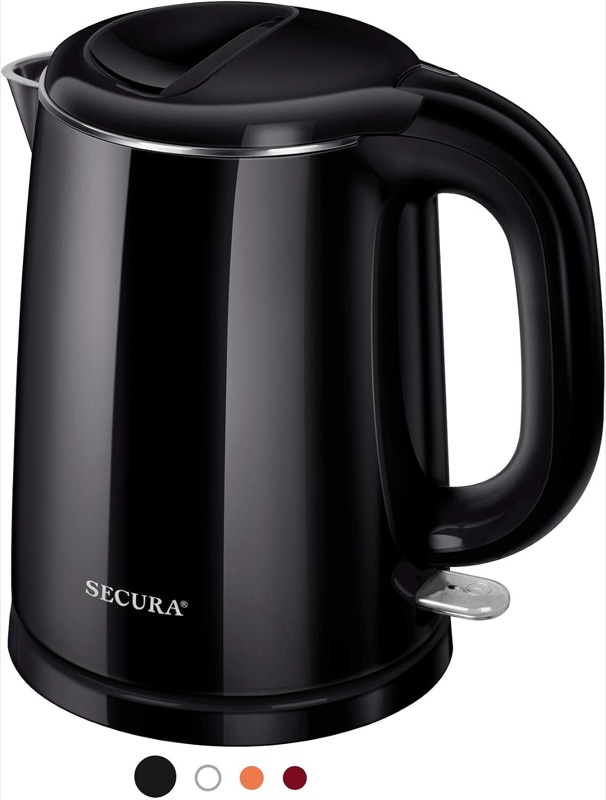
The Secura is the straightforward answer: a 1.0 L electric kettle where the interior walls, lid underside, and spout are all 304 stainless — no gauge tube, no hidden liner. The double-wall design keeps the outer shell cool enough to grab barehanded and keeps water hot longer after the boil. No temperature presets, no app, nothing to break; it boils water without adding anything to it, which is the entire job.
Check price on AmazonUpgrade pick
Fellow Stagg EKG Pro Electric Gooseneck
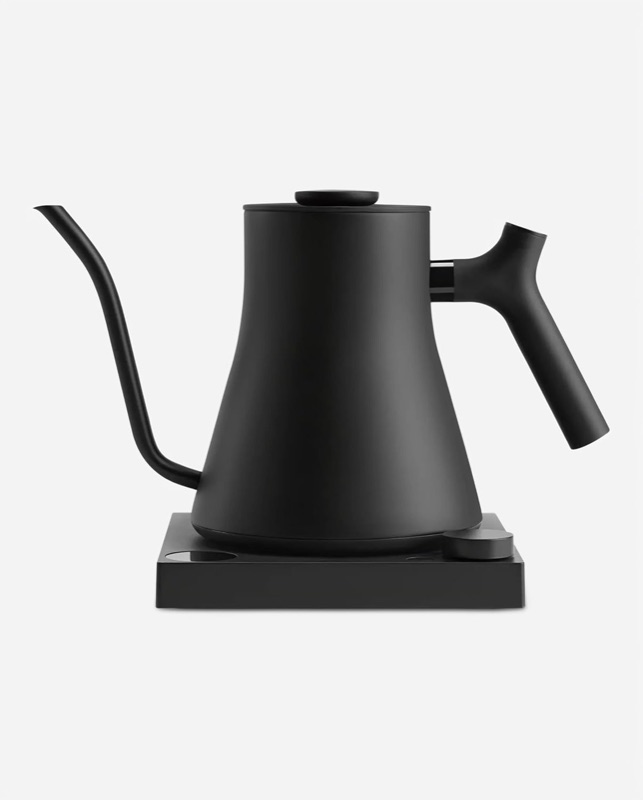
The kettle on the counter of half the specialty coffee bars you've been to. To-the-degree temperature control (135–212 °F), a 60-minute hold mode, and a gooseneck spout with genuinely precise flow — matched with a fully stainless interior. If you brew pour-over or steep green teas that punish boiling water, the temperature control is the difference between good and scorched. It's expensive for a kettle; it's cheap for the centerpiece of a daily ritual.
Check price on AmazonBudget electric
INTASTING Gooseneck Kettle
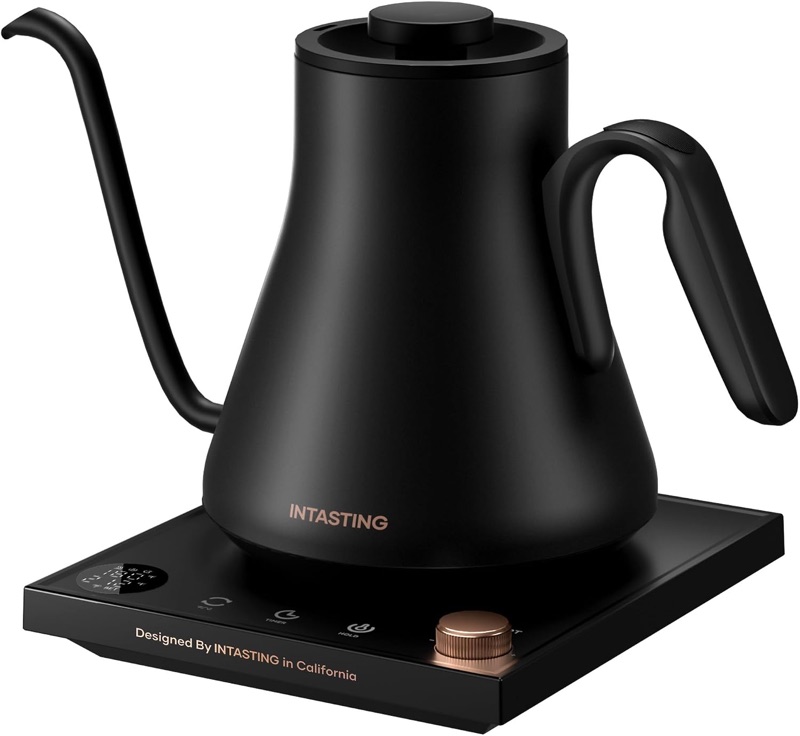
Most budget electric kettles cut costs exactly where it matters here — plastic lids, plastic gauges. The INTASTING doesn't: 304 stainless interior, five temperature presets, and a gooseneck spout, at roughly a third of the Stagg's price. The pour is less surgical than the Fellow's and the build is lighter, but the water path is clean and the presets cover tea and coffee temperatures. The value pick for anyone who wants temperature control without the price of entry.
Check price on AmazonStovetop pick
Cuisinart Professional 2-Qt Whistling Stovetop Kettle
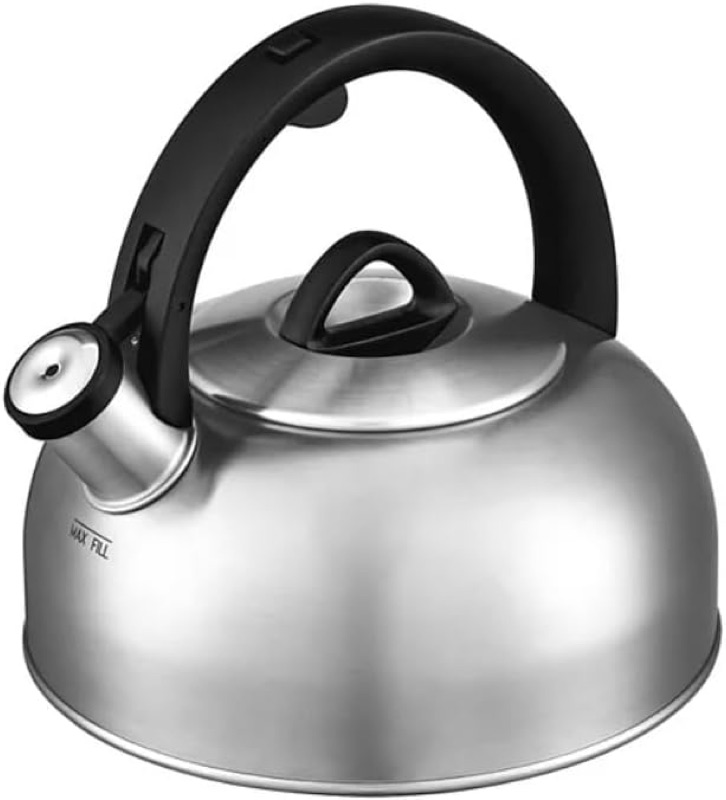
The zero-electronics answer: a brushed stainless steel body with a whistle instead of an auto-shutoff, from a brand whose kitchenware support actually exists if anything goes wrong. It holds two quarts (about 1.9 L), works on any burner, and contains no component that can wear out short of the whistle itself. The water sits in steel, full stop. If your kettle philosophy is "the fewer parts the better" — or your counter outlets are spoken for — this is the one.
Check price on AmazonFrequently Asked Questions
Do plastic kettles really release microplastics?
Yes — a 2020 study measured millions of particles per litre from boiling in plastic kettles, sustained across repeated boils. It's consistent with everything else we know: heat is the strongest accelerant of shedding, and a kettle maximizes it.
My kettle looks stainless. Am I fine?
Open the lid. Check the interior walls, the underside of the lid, the spout, and look for a clear vertical water-level window — that window is almost always a plastic tube sitting in the boil. If everything the water touches is steel or glass, you're fine.
Glass or steel?
Both are plastic-free in the boil. Glass lets you see scale and looks great; steel survives drops and double-walled models stay cool outside. No wrong answer — just check the lid and gauge on either.
What about the silicone seals?
Food-grade silicone gaskets are generally considered stable at boiling temperatures — silicone isn't a thermoplastic and doesn't fragment the way polypropylene does. Every electric kettle needs some seal; silicone is the good version.
Care & Maintenance Tips
- Descale monthly (weekly in hard-water areas): boil 1:1 water and white vinegar, let sit 20 minutes, rinse twice.
- Empty the kettle between uses rather than re-boiling stale water — better taste, less scale.
- Wipe the exterior and the plate contacts dry; mineral crust on contacts is the usual cause of electric-kettle death.
- Don't scrub steel interiors with steel wool; a nylon-free cloth and baking-soda paste handles any discoloration.
Keep Swapping
The kettle is one end of the brew — check the other. Our guides to plastic-free tea and plastic-free coffee finish what the kettle starts, and a proper water filter upgrades what goes into it.