Safe Sips for Small Humans: The Best Glass & Plastic-Free Baby Bottles
Standard formula prep in a polypropylene bottle — hot water, shake, feed — can release up to 16 million microplastic particles per litre. For the smallest bodies with the most sensitive development, this is the swap to make first.
We may earn a commission when you buy through our links. This helps fund our reporting at no additional cost to you. Our recommendations are based solely on independent research and expert consensus. As an Amazon Associate we earn from qualifying purchases.
Quick Picks: At-a-Glance
| Pick | Best for | Why we recommend it |
|---|---|---|
| Philips Avent Natural Glass (8 oz) | Most families | The most widely compatible glass bottle system, with a nipple most babies accept. |
| Dr. Brown's Anti-Colic Glass (3-pack) | Gassy/colicky babies | The anti-colic vent system pediatricians recommend, in glass instead of plastic. |
| Comotomo Silicone (Gen 2) | Unbreakable pick | Soft food-grade silicone body that survives every drop and mimics breastfeeding. |
| Pura Kiki Stainless (9 oz) | 100% plastic-free | The only major bottle with no plastic anywhere — steel body, silicone nipple, grows into a sippy cup. |
The Study That Changed Bottle-Buying
In 2020, researchers at Trinity College Dublin published a study in Nature Food that tested what happens inside polypropylene baby bottles during completely standard, WHO-recommended formula preparation. The answer: up to 16 million microplastic particles per litre, with hot sterilization water and shaking driving the release. Warmer water meant more particles. Polypropylene is what the overwhelming majority of plastic baby bottles are made of.
No study has established what those particles do to infant development — the honest state of the science is "measured exposure, unknown harm." But infants are the population where waiting for certainty has the worst track record (BPA took decades), and this is a case where the exposure is enormous, the alternative is proven, and the switch costs a few dollars per bottle. Glass bottles are literally what every baby drank from before the 1960s.
The same logic that applies to your own water bottle applies tenfold here: hot liquid + plastic + agitation is the worst-case combination, and a feeding bottle hits all three at every meal.
In-Depth Reviews
Our pick
Philips Avent Natural Glass Bottle (8 oz)
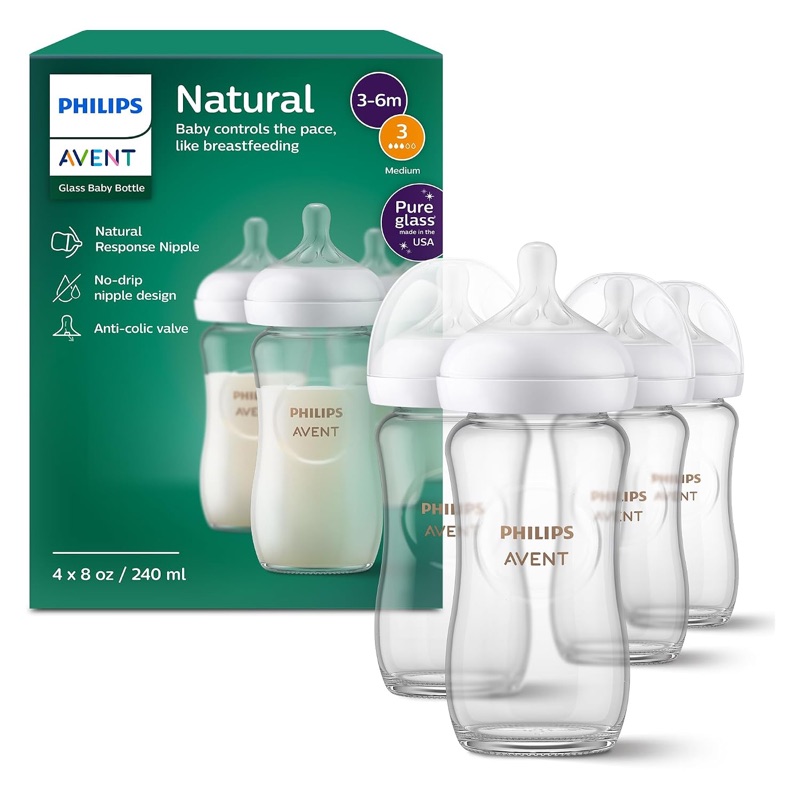
The default for a reason: the Avent Natural's wide, breast-shaped silicone nipple has one of the highest acceptance rates among bottle-refusing babies, and the glass version gives you that in premium borosilicate that tolerates boiling-water sterilization and freezer storage. The Avent system's ubiquity matters in practice — nipple flow rates, caps, and warmers are available everywhere, and most bottle warmers and sterilizers are designed around this exact shape. Heavier than plastic; that's the whole tradeoff.
Check price on AmazonBest anti-colic
Dr. Brown's Anti-Colic Options+ Glass (5 oz, 3-pack)
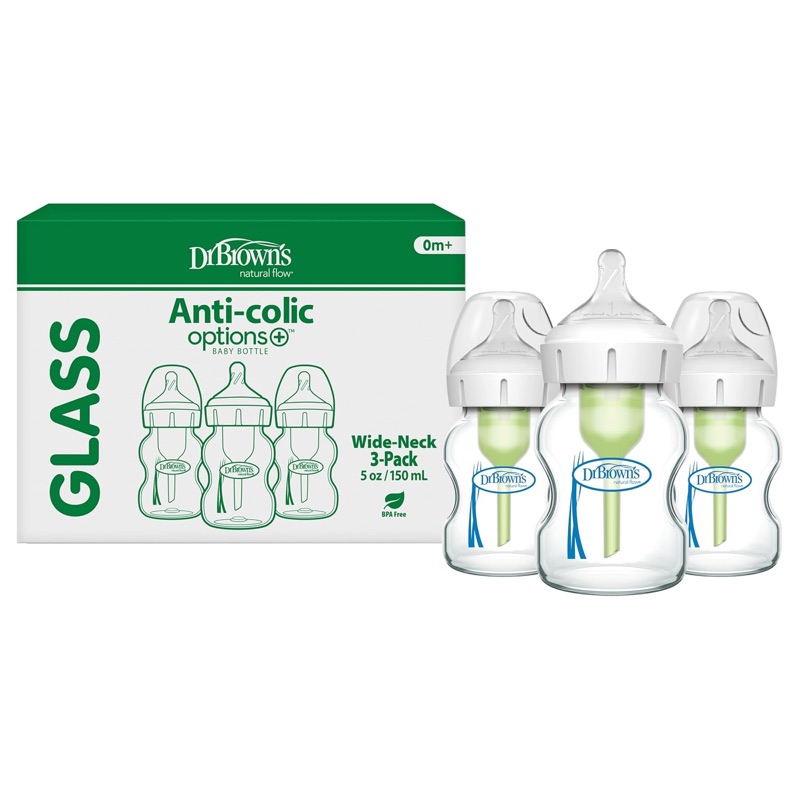
If your pediatrician has ever said the words "try Dr. Brown's," this is that bottle in glass. The internal vent system routes air away from the milk, which measurably reduces swallowed air for colicky and refluxy babies. The vent itself is plastic — but it sits above the milk, not soaking in hot formula, and the body your baby's meal actually sits in is glass. More parts to wash (every Dr. Brown's parent knows the little brush), but when colic is the problem, nothing else works as well.
Check price on AmazonUnbreakable pick
Comotomo Baby Bottle, Gen 2 (5 oz)
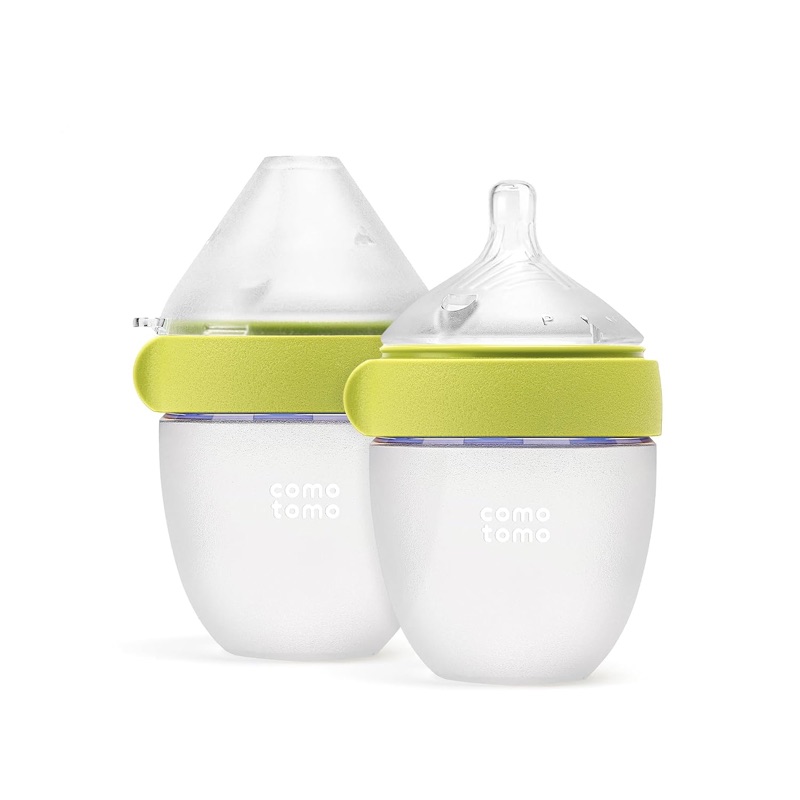
The counterpoint to glass's one weakness. The Comotomo's body is soft, squeezable food-grade silicone — not a thermoplastic, no fragmenting failure mode, and completely indifferent to being flung off a high chair. The squishy body lets babies grip it like skin, which makes it a favorite for combo breast/bottle feeding, and the wide mouth means you can clean it with your hand instead of a brush. It can't stand up to a boiling kettle poured directly in (silicone insulates, so warm it in a water bath), but as the diaper-bag and grandparents'-house bottle, it's unmatched.
Check price on Amazon100% plastic-free pick
Pura Kiki Stainless Steel Bottle (9 oz)
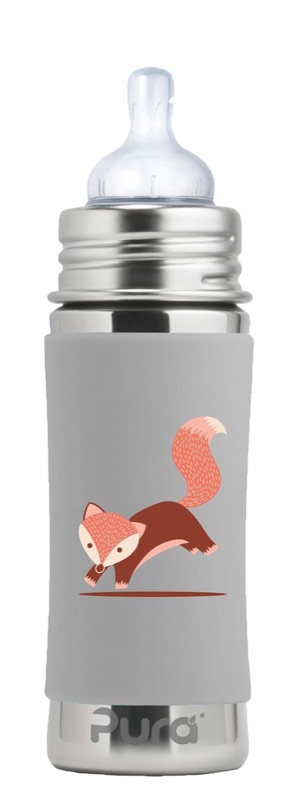
Every other bottle here still has a plastic collar or cap somewhere. The Pura Kiki doesn't: 316 stainless body, silicone nipple, silicone sleeve, silicone travel cover — it's certified 100% plastic-free, and as far as we can tell it's the only major baby bottle that is. It's also the longest-lived purchase on this page: swap the nipple for Pura's sippy spout or straw top and the same bottle serves from newborn to toddler to lunchbox. You can't see the milk level (steel), so you'll be weighing or pre-measuring feeds — the one real compromise.
Check price on AmazonFrequently Asked Questions
Is this actually dangerous, or just scary-sounding?
Honest answer: the exposure is well-measured (up to 16 million particles/litre in the Nature Food study); the health consequences for infants are not yet established. We treat it as a cheap-insurance swap: the alternatives are proven, equally functional, and cost roughly the same, so there's little reason to keep the exposure while the science catches up.
Aren't the nipples still plastic?
Nipples on every bottle here are silicone, not thermoplastic. Silicone is the standard exception in plastic-free feeding: it's stable at sterilization temperatures and doesn't fragment the way polypropylene does. Some collars and caps are plastic (except on the Pura Kiki) but don't contact hot milk.
How do I minimize microplastics if I keep using plastic bottles?
The study authors' own advice: prepare formula in a non-plastic container, let it cool, then pour into the bottle; never shake hot formula in plastic; never microwave plastic bottles; rinse after sterilizing with cooled boiled water. It works, but it's four workarounds versus one swap.
Do glass bottles survive real life with a baby?
Better than their reputation. Modern bottles are tempered or borosilicate glass and most families run them with silicone sleeves. They crack rather than shatter, and drops onto kitchen floors are survivable more often than not. For the true chaos zones — car, daycare bag — that's what the Comotomo or Pura is for.
Care & Maintenance Tips
- Glass and steel bottles tolerate boiling-water sterilization and dishwasher top racks indefinitely — no degradation clock like plastic.
- Inspect silicone nipples monthly and replace at any sign of clouding, tackiness, or tears (roughly every 2–3 months in heavy use).
- Add silicone sleeves to glass bottles for grip and drop protection; they don't block sterilization.
- For Dr. Brown's: wash the vent parts with the included brush every time — dried formula in the vent is what causes leaks.
- Skip abrasive scrubbers on steel interiors; a bottle brush and hot soapy water is all they need.
Keep Swapping
Formula starts as water — make sure that link in the chain is clean too with our guide to water filters that actually remove microplastics. And when the bottle graduates to solid-food storage, glass containers are the same swap for the whole family.