Plastic-Free Coffee: French Press, Ceramic & Glass Brewers
For a no-plastic coffee setup, follow the hot-water path. Stainless steel presses, ceramic drippers, and glass pour-over brewers make that path easier to inspect.
As an Amazon Associate we earn from qualifying purchases. We may earn a commission through our links at no extra cost to you. Recommendations are based on the documented criteria in this guide. Check the selected size, lid, seller, and current price before buying.
No-plastic coffee: choose your brewing method
The most straightforward way to reduce plastic contact during brewing is a manual brewer with a documented steel, glass, or ceramic brew path. Choose a French press if you like immersion brewing, a ceramic cone for a single mug, or a glass Chemex for a larger batch. These are material-based recommendations, not laboratory-confirmed guarantees of microplastic-free coffee.
| Method | Starting point | Tradeoff |
|---|---|---|
| Stainless steel French press | Frieling 36 oz | Wash the reusable screen after brewing |
| Ceramic pour-over | Hario V60 Ceramic 02 | Needs a paper filter and manual pouring |
| Glass pour-over | Chemex Classic 6-Cup | Glass requires care; buy compatible filters |
Follow the water from kettle to cup
A shiny exterior does not reveal the whole brew path. Check the kettle interior and spout, the brewer’s lid underside, the filter holder, and the vessel you drink from. For automatic machines, ask about tubing and the brew basket as well as the carafe.
Be specific about the goal. “No plastic touching hot water” differs from “no plastic anywhere in the product,” and neither describes the packaging your coffee arrived in. A handle outside the water path is different from an internal plastic funnel. If you also want to avoid silicone, check seals and filter edges explicitly.
- French press: inspect the lid underside, plunger guide, screen supports, and spout.
- Pour-over: check the exact material variant. A product family may include ceramic and plastic cones.
- Pod machine: a reusable metal pod changes the capsule, not the machine’s internal plumbing.
- Serving: include travel-mug lids and stirring utensils in your inspection.
For immersion brewing
Frieling Stainless Steel French Press (36 oz)
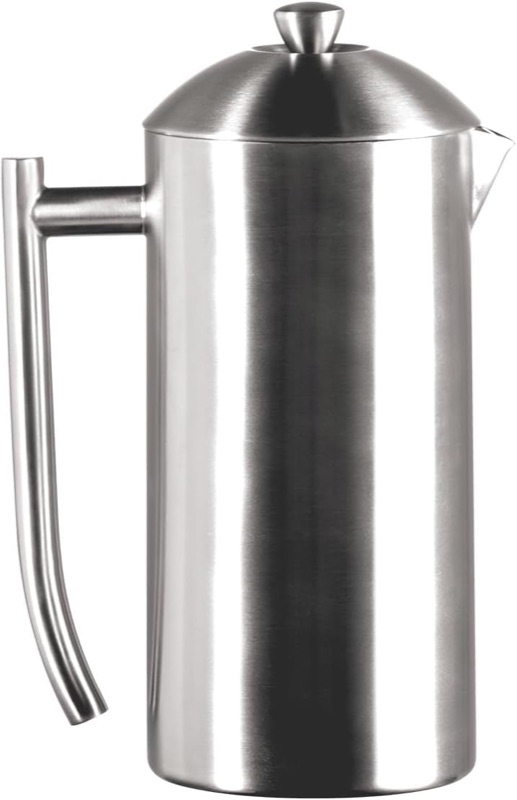
Frieling specifies an all-stainless construction without plastic for its French press. It is a direct route to a reusable metal brewing chamber and filter. The brushed 36 oz model is the Amazon version linked here.
Consider before buying: you must clean grounds from the screen and choose a batch size that fits your routine. For a closer look at the lid, filter assembly, and an alternative, read our plastic-free French press guide.
Check price on AmazonFor one mug at a time
Hario V60 Ceramic Dripper (02)
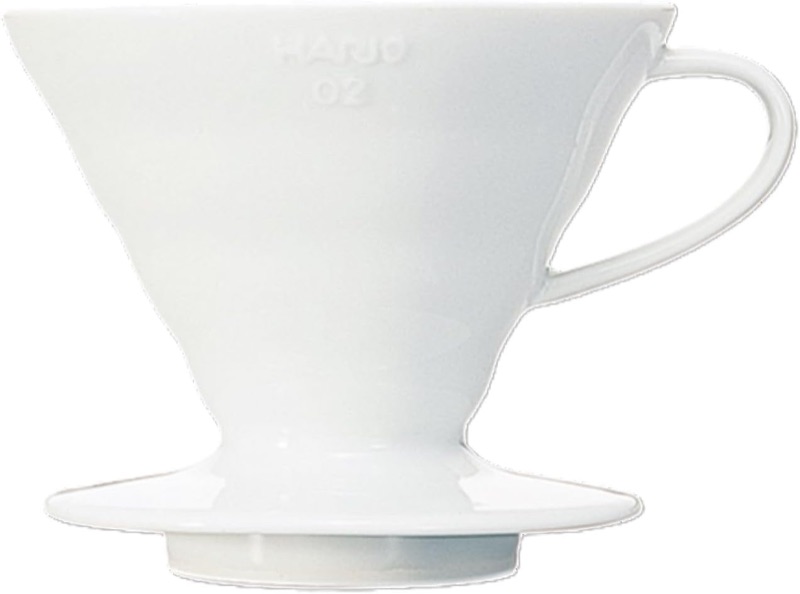
Choose the ceramic V60 02 specifically. The cone supports a paper filter over your mug or server and makes the hot-water path easy to inspect. A ceramic cone is a different material choice from the plastic V60 models.
Consider before buying: the dripper is only one part of the setup. You need the correct filter, a stable mug or server, and a kettle. Handle ceramic carefully and check for damage before brewing. Our kettle guide covers the upstream part of the water path.
Check price on AmazonFor a larger pour-over batch
Chemex Classic 6-Cup
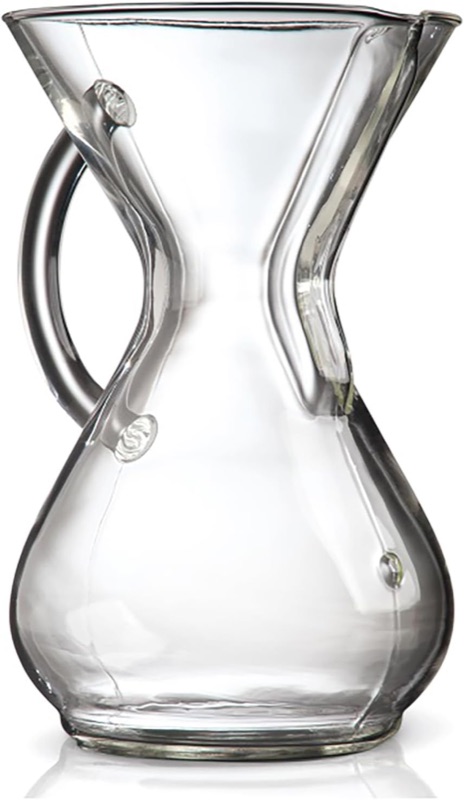
The Classic 6-Cup Chemex combines a glass brewer and server, with a wood collar outside the brewing chamber. It gives you an easily visible water path through a paper filter into glass.
Consider before buying: “six cups” is a model designation, not six large travel mugs. Check the stated capacity against the amount you normally brew, and include replacement filters in your budget. The glass vessel needs careful handling.
Does this guarantee coffee without microplastics?
No. Ingredient water, coffee, equipment, and the surrounding environment are separate possible sources of particles. We have not measured the finished coffee from these brewers, and do not infer a coffee-maker particle count from a tea-bag or baby-bottle experiment.
The reason for choosing these methods is narrower and observable: you can inspect the materials that touch the hot water. The FDA’s evidence overview explains why detecting particles and establishing a health risk are different questions. If your main concern is the water supply, compare filters with documented microplastic-reduction claims.
What if you want to keep a pod machine?
A reusable stainless pod can reduce disposable capsule use, but it does not make the machine plastic-free. Inspect the pod’s lid and gasket and verify compatibility with your exact machine. We are not recommending an unspecified “all-steel K-Cup”: a model-specific materials list is necessary before treating it as a no-plastic option.
Build a routine you will keep using
Rinse equipment after brewing, disassemble filters as the manufacturer directs, and let parts dry. Replace a damaged screen or glass vessel rather than improvising a repair. Start with one brewer that fits your existing mug and morning routine; a complete collection of equipment is unnecessary.
Frequently asked questions
How can I make coffee without plastic touching hot water?
Use a brewer with documented metal, glass, or ceramic contact surfaces, then check your kettle, filter assembly, lid, and serving vessel too. The whole path matters more than the exterior material.
Is a French press or pour-over better for avoiding plastic?
Either can work when the exact model has the materials you want. A French press uses a reusable screen; the ceramic and glass pour-over options here use paper filters. Choose the cleaning routine and brewing method you prefer.
Does a stainless reusable K-Cup make my Keurig plastic-free?
No. It changes the capsule but does not replace the machine’s reservoir, tubing, or other internal components. Check the pod’s own seal and lid materials as well.
Are all Hario V60 drippers ceramic?
No. Specify the ceramic version when buying; the V60 name also appears on other material variants.
Can these brewers promise microplastic-free coffee?
No. We have not tested their finished coffee for particles. These recommendations address equipment materials, not a zero-particle or health-outcome guarantee.
Sources and editorial method
We reviewed manufacturer specifications and the sources below on September 21, 2026. This is a research-based guide; we have not conducted hands-on product tests or measured particle release from these products. Material descriptions and laboratory results have different limits, which we identify in the recommendations.