Best Alternatives to Plastic Cutting Boards
Wood is our starting choice for everyday chopping. Compare alternatives to plastic cutting boards by material, knife use, care requirements, and the evidence behind shedding claims.
As an Amazon Associate we earn from qualifying purchases. We may earn a commission through our links at no extra cost to you. These recommendations compare published construction and care information; we have not performed hands-on or particle-shedding tests. Check the selected model, size, seller, and current price before buying.
Which alternative to plastic cutting boards should you choose?
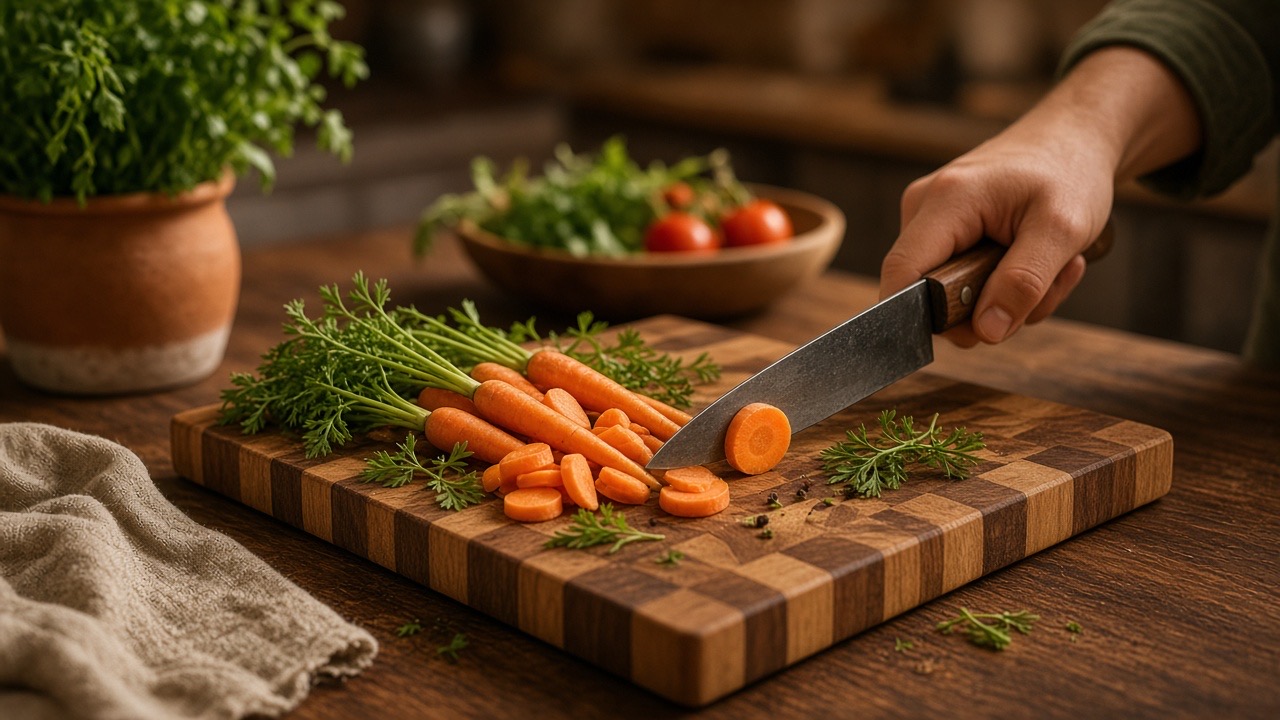
For everyday chopping, start with a wooden board designed for food preparation. It replaces the plastic surface directly under your knife. Choose the size and care routine you can live with before paying extra for a particular grain pattern or brand.
Our shortlist includes a walnut end-grain block, a teak alternative, and an acacia board that doubles as a serving board. We also explain synthetic rubber because it is often suggested as an alternative, but we do not label it microplastic-free. None of these recommendations is a measured health-benefit claim.
| Option | Why consider it? | What to check |
|---|---|---|
| John Boos walnut end-grain block | A substantial wood prep surface | Selected size, weight, and space for hand-washing |
| Teakhaus end-grain board | A teak option with published care guidance | Regular oiling is still required |
| Sonder LA acacia board | Edge-grain surface for prep and serving | Features vary by model; hand-wash only |
| Asahi Cookin’ Cut rubber board | A different cutting feel from wood | Synthetic material; shedding remains unverified; no dishwasher |
Wood, bamboo, rubber, glass, or steel?
| Surface | Reason to consider it | Main limitation |
|---|---|---|
| Wood | Our starting choice for regular knife work | Inspect the finish and glued construction; needs appropriate cleaning, drying, and care |
| Bamboo | A plant-based cutting surface | USDA describes it as harder than hardwoods; check the product’s binders and finish |
| Synthetic rubber | Different cutting feel; some models can be resurfaced | Not evidence of zero synthetic-particle release; follow model-specific heat limits |
| Glass or stainless steel | The surface itself is not plastic | Hard surfaces can damage knife edges; not our first choice for everyday chopping |
USDA's cutting-board guidance covers wood, nonporous surfaces, and bamboo. A UC Davis researcher’s summary, hosted by John Boos, also notes the knife-edge drawbacks of glass and stainless steel. Our preference for wood weighs those practical considerations; we have not tested all these materials against each other.
A board made with wood fibers and resin is a composite, not simply solid wood. For wood and bamboo products, look for a food-contact use statement, a disclosed finish, and clear care instructions. A material label alone does not establish the composition of every coating, adhesive, or accessory.
What the cutting-board microplastics study actually found
A 2023 study in Environmental Science & Technology measured particle release during chopping on polyethylene and polypropylene boards. Its estimates varied with the material and chopping conditions. For polyethylene, the authors modeled an annual exposure of 14.5–71.9 million particles per person under their assumptions.
That is an extrapolation from experiments, not a measurement of what every cook eats in a year. The work supports concern about abrasion from those plastic surfaces; it does not prove that every alternative releases nothing or that changing boards prevents disease. It also does not establish an Asahi rubber-board shedding result.
Choosing a wooden cutting surface removes that particular plastic surface from your prep routine. It does not make the ingredients, knife, or rest of the kitchen particle-free.
Boards to consider
For a substantial prep block
John Boos Walnut End-Grain Block
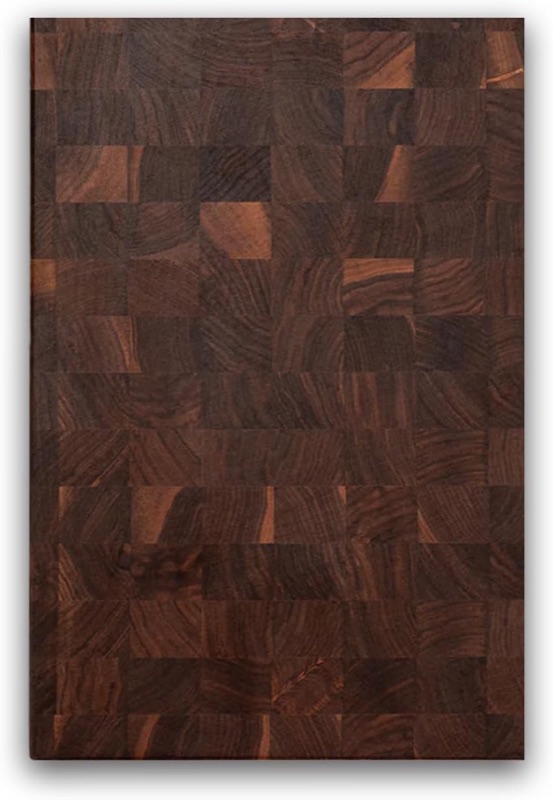
The manufacturer’s walnut end-grain range is an option if you want a dedicated wooden chopping surface. End grain describes the orientation of the fibers; it is not a promise that damage disappears or that the board will last forever.
The tradeoff: a thick block takes more space to lift, wash, and dry. Check the selected dimensions and weight against your sink and storage. Buy it for the construction and work area you need, rather than a claim of being the safest board.
Check price on AmazonTeak alternative
Teakhaus End-Grain Butcher Block
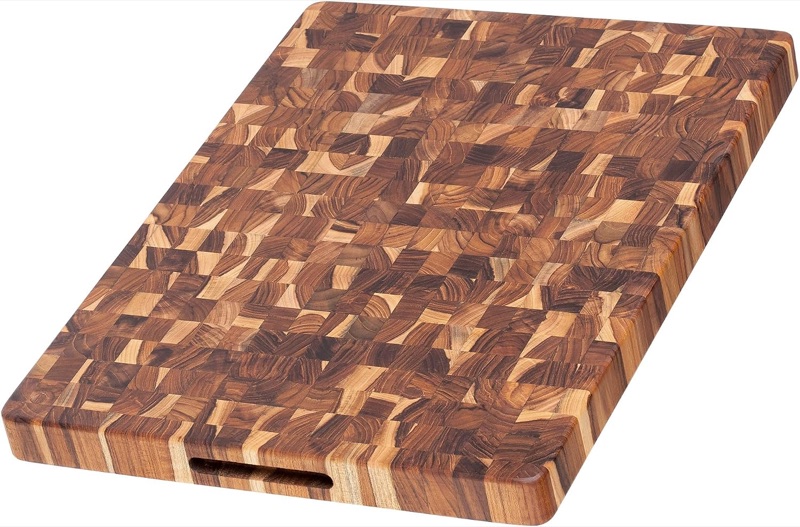
Teakhaus offers several sizes in its end-grain range. Compare the selected model’s thickness, handles, and juice groove with how you prepare food. The brand explains its grain construction and teak sourcing in its product FAQ.
The tradeoff: teak is not maintenance-free. The maker calls for hand-washing, drying, and regular mineral-oil treatment. We have not measured a maintenance or knife-edge advantage over the other boards here.
Check price on AmazonPrep and serving
Sonder LA Acacia Board
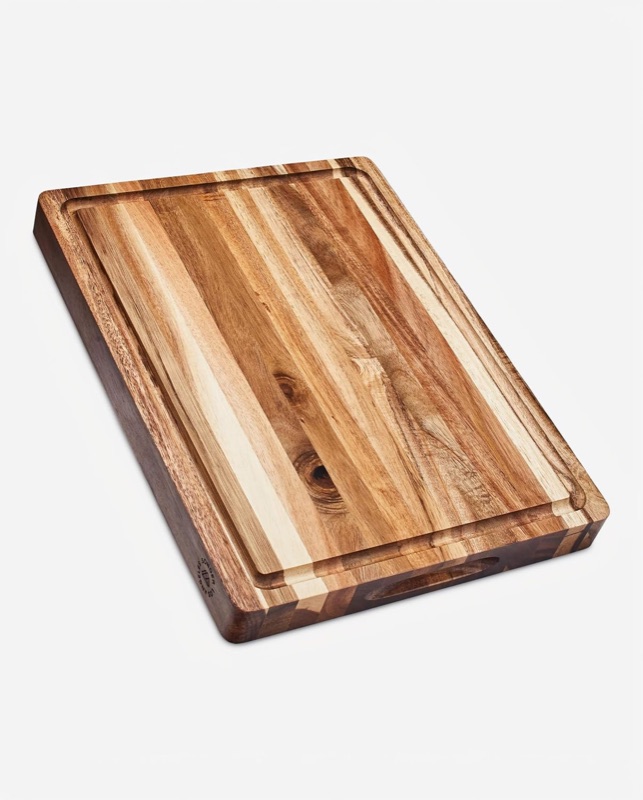
Sonder’s Winsome acacia design combines an edge-grain cutting face with a juice groove and a serving well on the reverse. That makes it worth comparing if one board needs to handle both food preparation and serving.
The tradeoff: it still needs hand-washing, drying, and oiling. The maker lists a 16 × 12 × 1.5-inch size for Winsome; check the retailer’s model selection. A useful serving feature does not replace a separate board for raw meat.
Check price on AmazonSynthetic alternative with an evidence gap
Asahi Cookin’ Cut Rubber Board (LL)
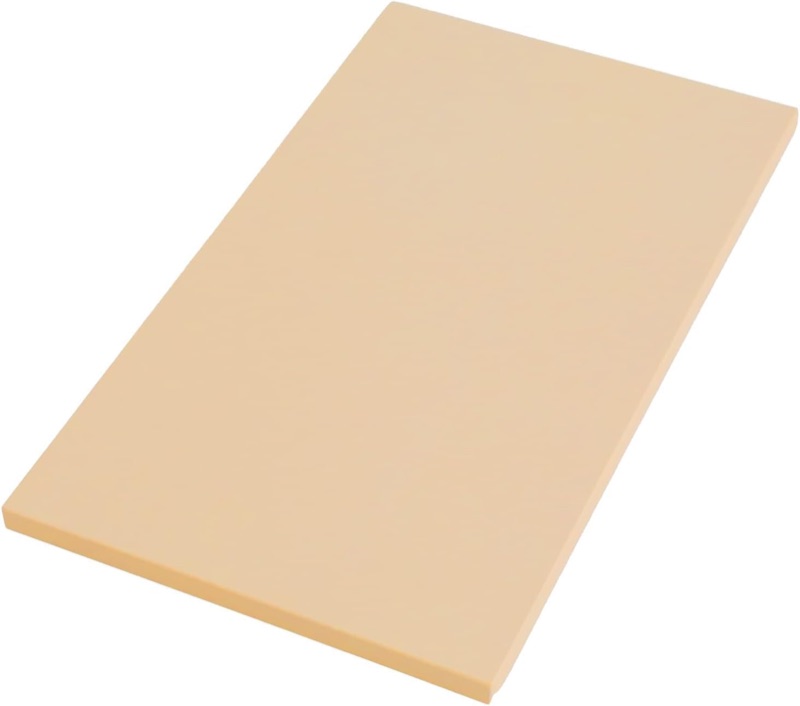
Parker Asahi identifies the material as synthetic rubber. Its guide describes cleaning and resurfacing, but the information reviewed here does not verify zero particle release during chopping. Choose it only if that distinction fits your priorities.
The tradeoff: this is not a way to remove synthetic material from under your knife. The maker also says not to use a dishwasher or dish dryer, because heat can soften the board and cause warping. Our previous dishwasher recommendation was incorrect.
Check price on AmazonCleaning and care matter with every material
USDA accepts wood and nonporous cutting boards. Material choice does not replace safe handling:
- Keep separate boards for raw meat, poultry, and seafood and for foods eaten without further cooking.
- Wash after use, rinse, and dry. Follow food-contact sanitizer directions when sanitizing.
- Replace boards with deep, hard-to-clean damage. Do not assume oiling repairs cracks.
- Follow the selected maker’s oiling and storage instructions. The wood picks here require hand care; the Asahi board is also not dishwasher-safe.
For product-specific care, see Sonder’s instructions, Teakhaus’s FAQ, and Parker Asahi’s guide. We do not recommend a single sanding method for every construction.
Frequently asked questions
What is the best alternative to a plastic cutting board?
For everyday knife work, our starting choice is a wooden board made for food preparation. Choose a size you can wash and dry comfortably, check its finish and construction, and follow the maker’s care instructions.
Are wood cutting boards sanitary?
They can be used safely with proper cleaning and food handling. USDA allows wood or nonporous boards; use separate boards for raw animal foods and ready-to-eat foods, and replace surfaces that are too worn to clean.
Are rubber cutting boards microplastic-free?
We have not verified that claim. Asahi Cookin’ Cut uses synthetic rubber, and the cited plastic-board study does not establish a zero-shedding result for that product.
Is bamboo a plastic-free alternative?
A bamboo cutting surface is an alternative to polyethylene or polypropylene, but inspect the whole product. Check its adhesives, finish, and any resin or plastic components instead of relying only on the word bamboo.
What is the difference between end-grain and edge-grain boards?
End-grain boards expose the ends of wood fibers; edge-grain boards use their long edges. Construction affects price and knife feel, but neither design guarantees an indestructible or maintenance-free board.
Can I put an Asahi Cookin’ Cut board in the dishwasher?
No. Parker Asahi’s instructions say dishwasher and dish-dryer heat can soften the synthetic rubber and cause warping. Hand-wash and dry it as directed.
Sources and editorial method
Updated October 1, 2026. We compared published materials, construction, care requirements, and the scope of the cited research. We have not conducted comparative chopping, hygiene, or particle-shedding tests. Product examples are not ranked by a measured reduction in human exposure. This update removes unsupported non-shedding claims and corrects the Asahi dishwasher advice.
- 2023 study: Cutting Boards: An Overlooked Source of Microplastics in Human Food?
- USDA FSIS: cutting-board cleaning, separation, and replacement
- UC Davis cutting-board research summary, hosted by John Boos
- John Boos walnut end-grain product range
- Teakhaus: materials, construction, and care FAQ
- Sonder LA Winsome: construction, dimensions, and care
- Parker Asahi Cookin’ Cut manufacturer guide (PDF)
Keep swapping
Check one more food-contact surface: our salt grinder microplastics guide explains plastic burrs, ceramic and steel mechanisms, and ways to skip grinding.
For the rest of your prep routine, compare wood, steel, and silicone cooking utensils, glass food-storage containers, and alternatives to plastic wrap.